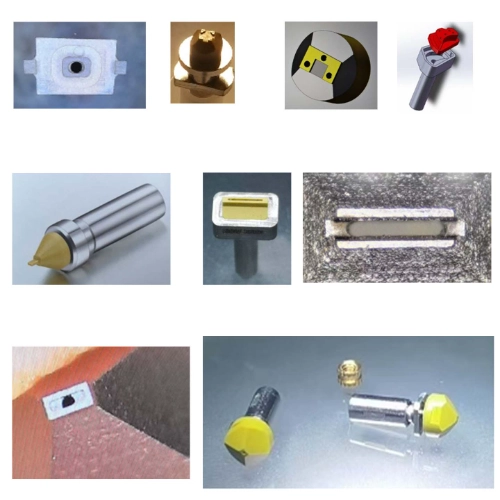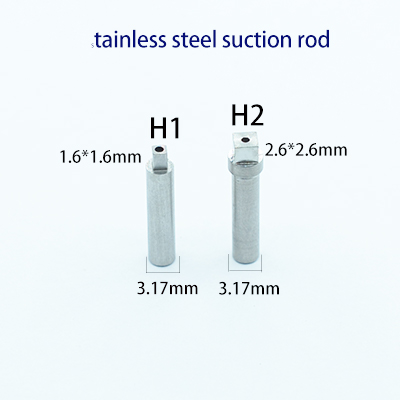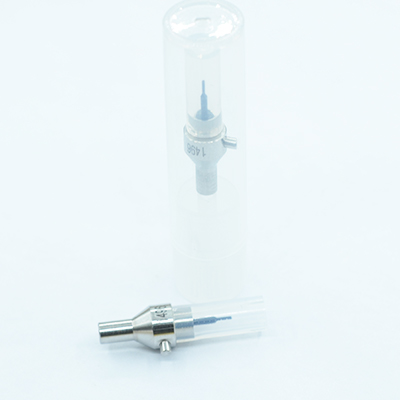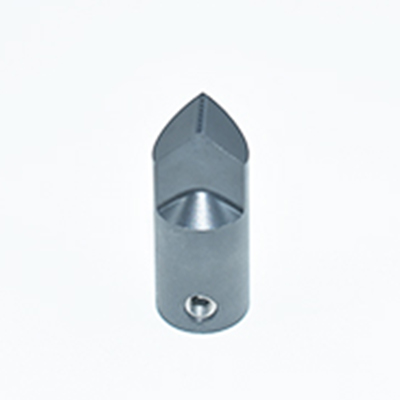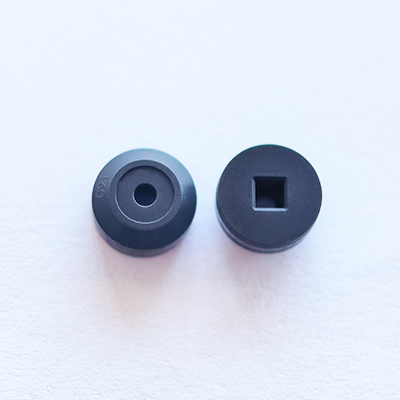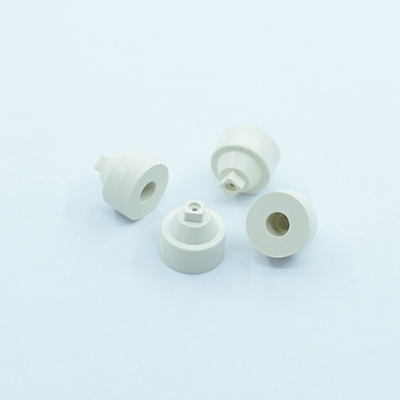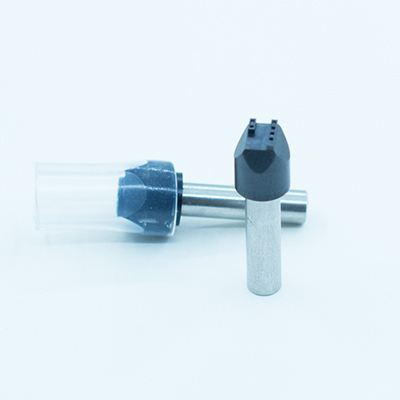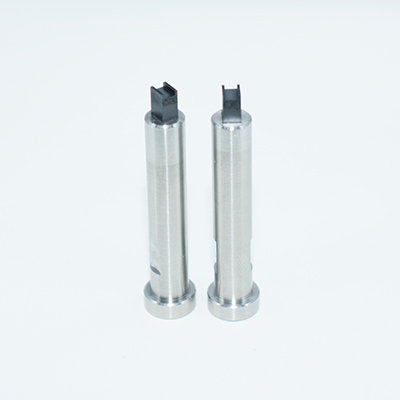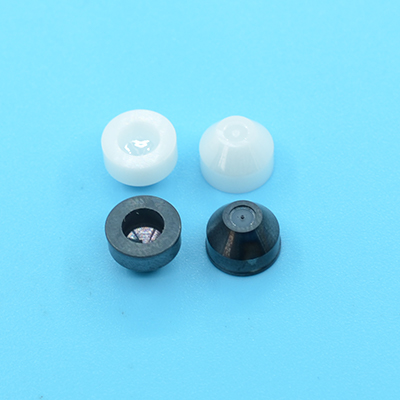
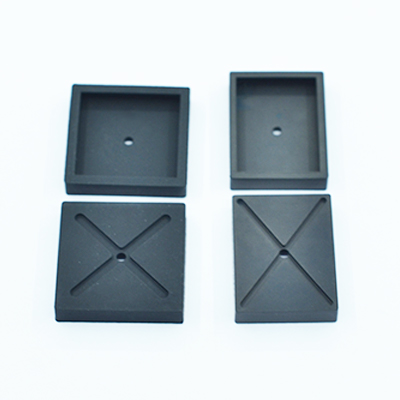
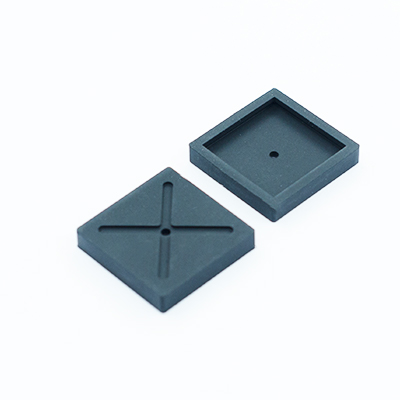
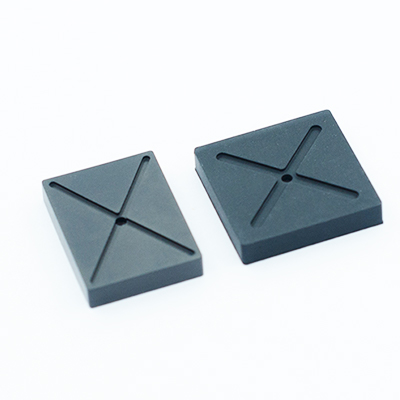
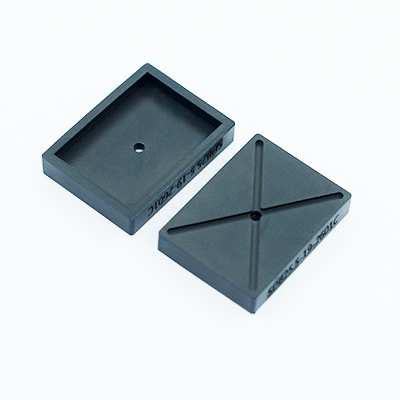
- Semiconductor rubber suction nozzle
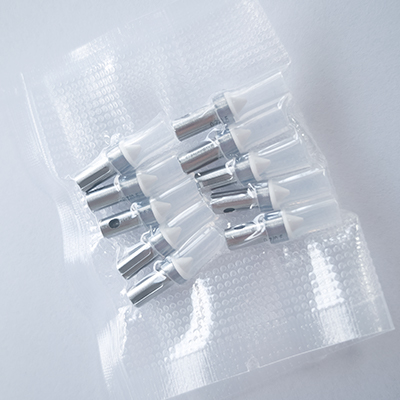
The semiconductor rubber suction nozzle is a key consumable in semiconductor packaging (especially in the die bonding/patching process), mainly used to suck and transport chips (such as LED wafers, IC bare wafers, etc.) from the wafer or material box.
1.1 Main functions
- Suction and transportation of chips: Through the principle of vacuum suction, it precisely sucks and transports tiny chips from the wafer or material box to the designated position (such as supports, substrates) for mounting.
- Protection of chip surface: The rubber material is soft, avoiding the indentation, scratch or dark collapse caused by direct contact between the hard suction nozzle (such as tungsten steel, ceramic) and the chip surface, especially suitable for chips with lines in the center, which can protect the chip’s mounting and packaging area to the greatest extent.
- Improvement of packaging yield: Compared with hard suction nozzles, the rubber suction nozzle causes less mechanical damage to the chips, effectively improving the problems of dark collapse and IR (infrared detection) defects, thereby increasing the yield of semiconductor packaging.
1.2 Core performance characteristics - High temperature resistance: It is divided into normal temperature rubber (with a temperature resistance of about 100°C) and high-temperature rubber (with a temperature resistance of up to 300°C or even 480°C), which can adapt to the high-temperature environment in the die bonding process.
- Anti-static: The rubber material itself has anti-static properties, preventing sensitive chips from being damaged by static electricity.
- Good flexibility: The material is soft, and when in contact with the chip, it does not cause hard friction, reducing particle detachment and surface damage.
- Precise process: The size accuracy is extremely high, with the outer diameter (OD) of the head reaching as small as 0.15mm (such as the RT-006 model), meeting the precise mounting requirements for tiny chips.
- Various specifications: Common models range from RT-006 to RT-100, covering various chip size requirements, and can be customized with special specifications according to customer needs.
1.3 Material: Nitrile Butadiene Rubber (NBR)
1.4 Comparison with other material suction nozzles
Material Advantages Disadvantages Applicable scenarios
Rubber Anti-static, does not damage the chip, flexible Low hardness, poor wear resistance High-power LEDs, ICs, etc. for precision products
Electrolytic wood Anti-static, moderate hardness General durability Medium batch products
Tungsten steel High hardness, durable Not anti-static, prone to chip wear High-volume conventional products
Ceramic Maximum hardness, anti-static Prone to cracking, may wear the chip High-volume high-precision products
- Semiconductor dispensing head
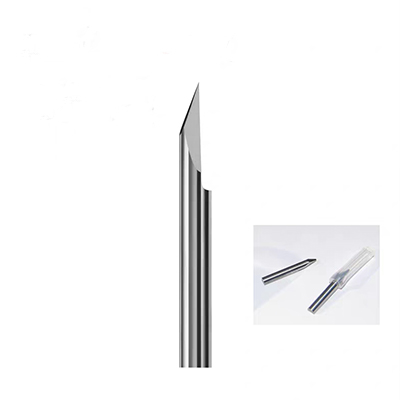
The semiconductor dispensing head (also known as dispensing needle/ nozzle) is a core consumable on die bonding machines or dispensing machines, responsible for precisely applying encapsulation glue (such as silver paste, epoxy glue, bottom fill glue, etc.) to the designated positions of the chip or substrate.
2.1 Main functions
- Quantitative dispensing: Squeezing glue from the glue cylinder at an accurate amount (minimum down to picoliter level) to apply it to the chip pads, substrates, etc. at the target position.
- Form control: Through the design of the inner diameter and cone angle of the needle, controlling the diameter, height and shape of the glue dot to meet different process requirements (such as chip bonding, damming, bottom filling, etc.).
- Protection of workpiece: Some needle heads use flexible materials or special designs to avoid scratching the chip or substrate surface during contact dispensing.
2.2 Core performance characteristics - High precision: Dispensing accuracy can reach ±0.01mm, with the minimum glue dot diameter controlled at around 50μm (about the thickness of a hair), meeting the requirements of semiconductor miniaturization packaging.
- Various specifications: Needle head specifications are commonly represented by G numbers (14G to 35G), with larger numbers indicating smaller inner diameters. For example, the inner diameter of 32G is approximately 0.11mm, suitable for micro operations such as chip bottom filling.
- Rich materials:
◦ Stainless steel: Good rigidity, wear-resistant, suitable for most glues, longest lifespan
◦ Teflon (PTFE): Strong anti-adhesion, suitable for quick-drying glue, UV glue, preventing glue accumulation and solidification
◦ Polypropylene (PP): Corrosion-resistant, flexible, can prevent scratching the substrate
◦ Ceramics: Suitable for high viscosity or highly corrosive adhesives - Various types: Face-mounted (general-purpose), inclined (anti-blockage), curved angle (narrow spaces), fan-shaped (large-area coating), brush-type (even coating), etc., suitable for different process scenarios.
- High-frequency response: When used with spray valves, the dispensing frequency can reach above 200Hz, enabling high-speed batch production.
- Anti-slip/anti-dripping: Some needles have built-in suction structures or special flow channel designs, effectively preventing glue dripping and pulling when the glue is stopped, ensuring the consistency of the glue dots.
2.3 Quick Reference for Selection Criteria
Selection factors Explanation
Adhesive viscosity Select larger inner diameter/screw valve for high viscosity, and smaller inner diameter/spray valve for low viscosity
Glue dot size Select high G number (fine needle) for small glue dots, and low G number (coarse needle) for large glue dots
Workpiece structure Flat surfaces select straight needles, narrow spaces select curved angle needles, large areas select fan-shaped needles
Adhesive properties Quick-drying/UV glue select Teflon needles to prevent curing blockage
Precision requirements High precision select stainless steel thin-walled needles or ceramic needles
Manufacturer: Shenzhen Haizixiang Electronics Co., Ltd. (Dingxin Precision)
Website: www.dingxinprecision.com
Email: huzhenghai@dingxinprecision.com
If you need specification parameters and quotations, please contact us!