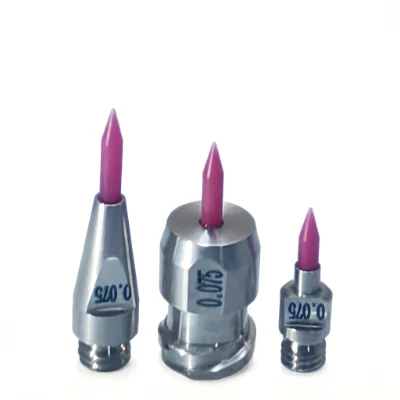
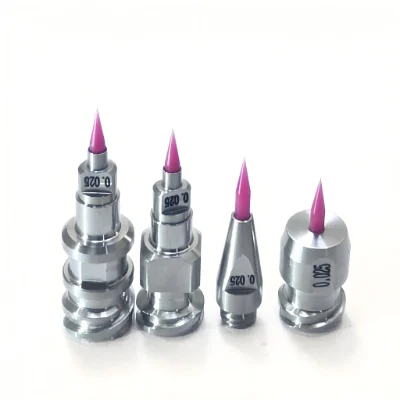
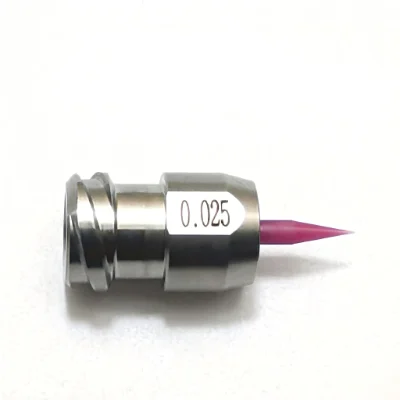
1. Product Overview
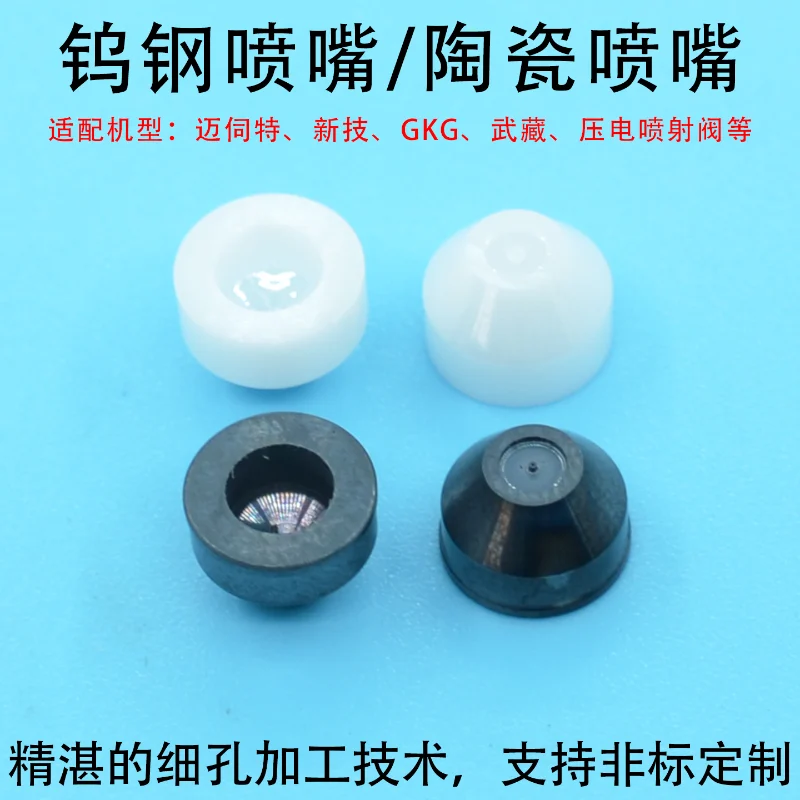
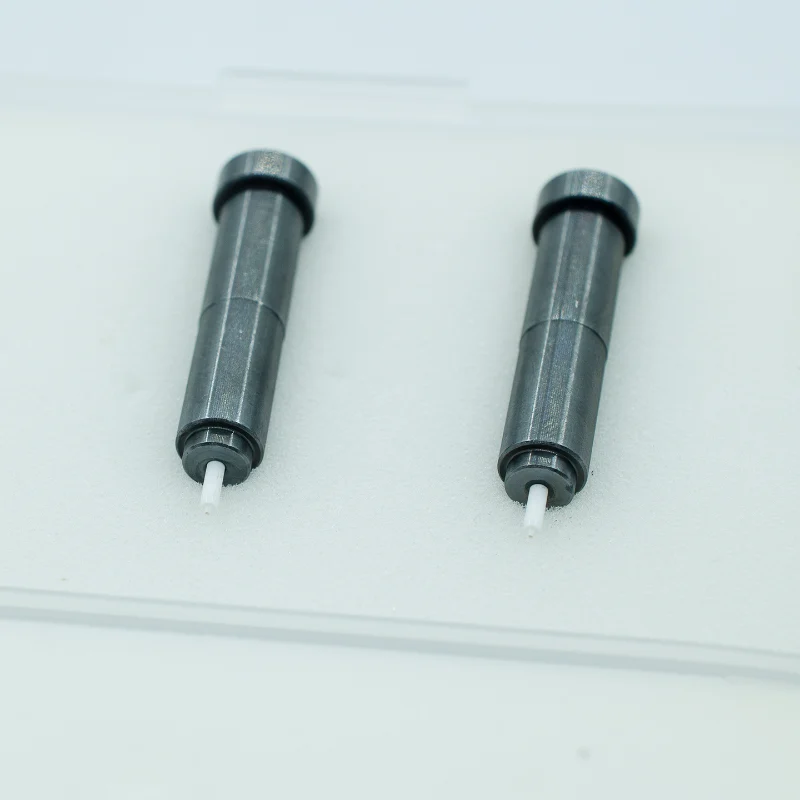
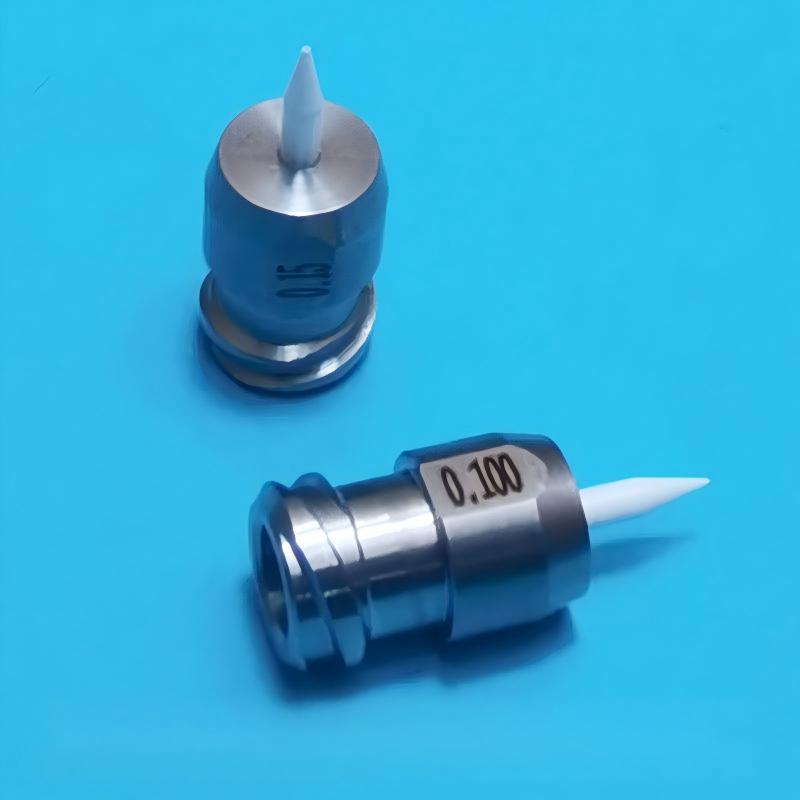
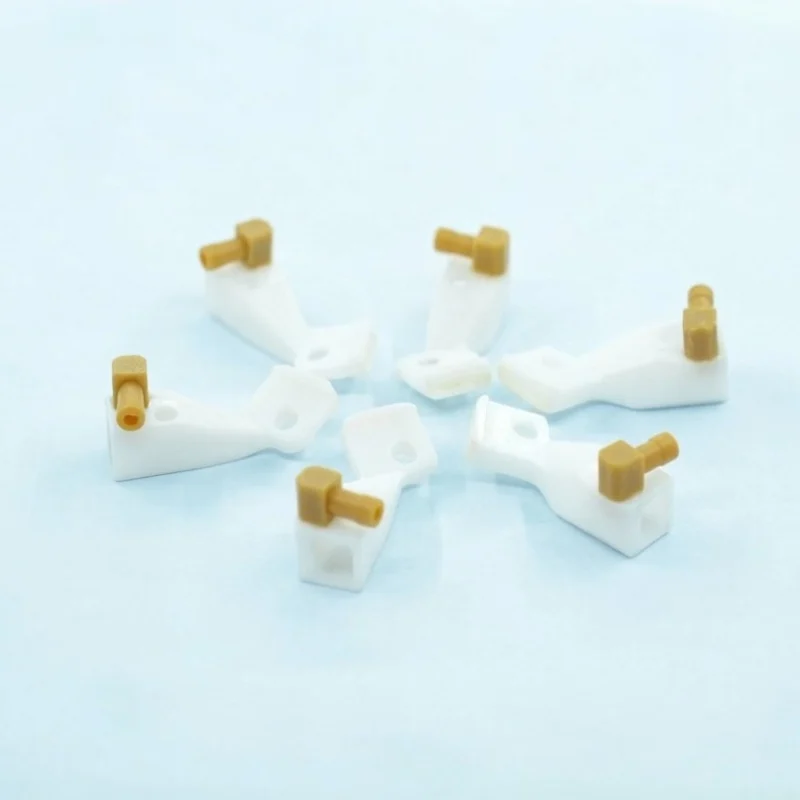
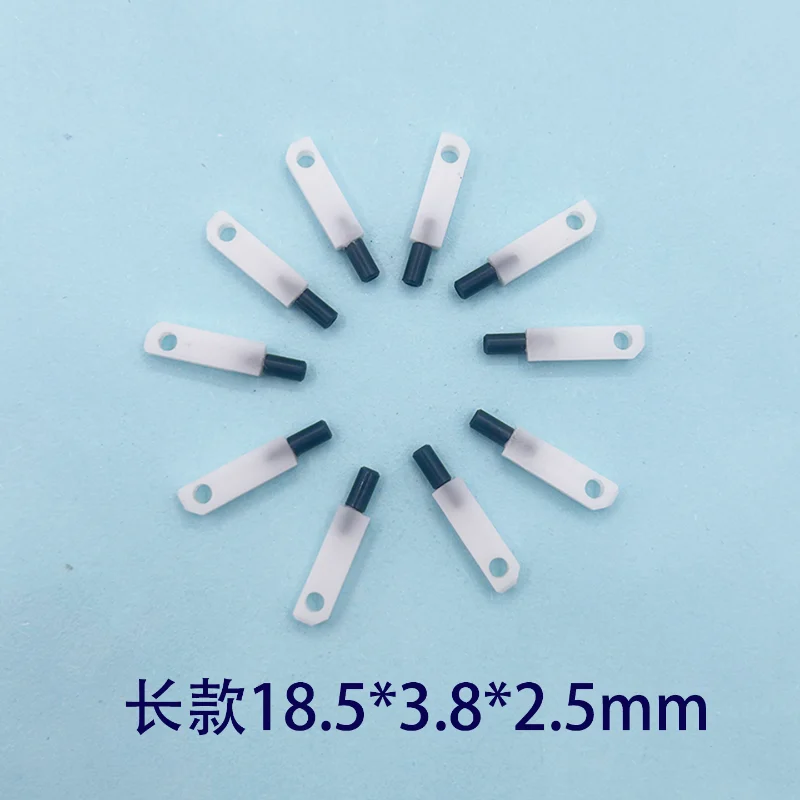
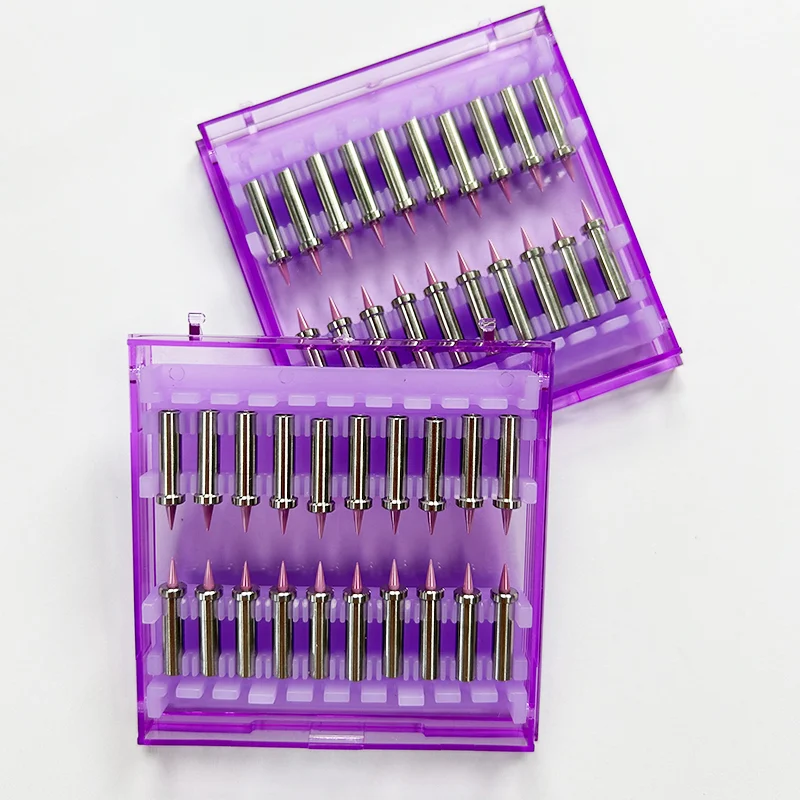
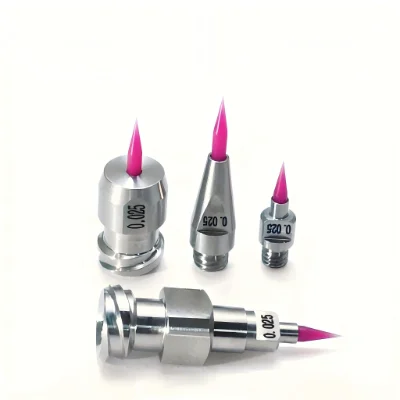
Ruby ceramic dispensing needles are ultra-precision micro-dispensing consumables for high-speed jet valves and contact dispensers. They adopt a composite structure: ruby orifice insert paired with alumina ceramic or stainless steel body. Synthetic ruby features Mohs 9 hardness, ultra-low friction and excellent wear resistance, making it ideal for highly abrasive fillers such as silver paste, solder paste and abrasive epoxy.
The mirror-polished ruby inner bore delivers stable micro-dot consistency and effectively suppresses glue tailing, climbing and orifice enlargement after long cycles. Widely used in semiconductor packaging, Mini/Micro LED, CCM lens assembly and automotive electronic micro-dispensing processes.
2. Core Features & Advantages
- Superhard Ruby Orifice Insert Synthetic ruby (Mohs 9) outperforms common alumina ceramic in wear resistance. Resists erosion by high-filler, abrasive glues; maintains stable orifice size over millions of dispensing cycles, reducing dot drift.
- Ultra-Smooth Mirror Polished Inner Channel Diamond-lapped ruby bore with extremely low surface roughness. Low fluid friction improves glue flow, minimizes tailing, satellite dots and glue buildup around the tip.
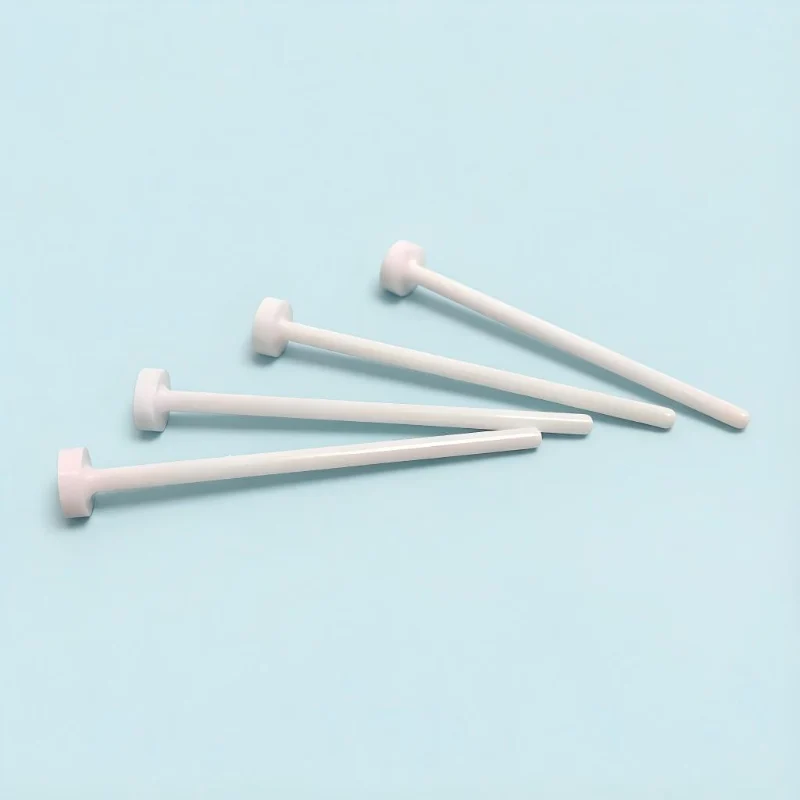
- Composite Structural Design Optional ceramic or stainless steel shank. Ceramic body provides insulation and low particle performance; stainless steel body offers high rigidity and impact resistance. Dual-thread base optional for secure locking to dispensing valves.
- Ultra-Micro Orifice Capability Supports ultra-fine inner diameters starting from 0.025 mm, meeting ultra-micro dot requirements for chip underfill and die attach.
- Anti-Climb & Stable Dispensing Performance Precision tip contour reduces surface tension effects, inhibits glue climbing up the outer tip surface, keeps dot volume repeatability consistent in continuous mass production.
- Cleanroom-Grade & Customizable Low particle generation for Class 100 packaging environments. Custom orifice size, taper angle, total length, thread specification and shank material for Musashi, Nordson, VerMes and other jet dispensing systems.
3. Typical Applications
- Semiconductor packaging: Silver paste, die attach epoxy, underfill, solder paste micro dispensing
- Optoelectronics: Mini/Micro LED fluorescent glue coating, CCM/VCM lens bonding
- Automotive electronics: Sensor and ECU module precision adhesive dispensing
- Consumer electronics: Camera module, MEMS, small component packaging
- Applicable fluids: Silver paste, solder paste, filled epoxy, UV adhesive, silicone and other abrasive slurries
4. Technical Specification Table
表格
| Item | Technical Parameter |
|---|---|
| Product Name | Ruby Ceramic Dispensing Needle / Ruby Insert Dispense Tip |
| Orifice Material | Synthetic Ruby |
| Body Material | 99.9% Alumina Ceramic / SUS304 Stainless Steel |
| Inner Diameter | Φ0.025 mm ~ Φ0.5 mm (customizable) |
| Tip Outer Diameter | Φ0.08 mm ~ Φ1.0 mm (customizable) |
| Total Length | 3 mm ~ 15 mm (customizable) |
| Taper Angle | 15° / 30° / 45° or custom |
| Dimensional Tolerance | ±0.002 mm |
| Inner Bore Roughness | Ra ≤0.01 μm (ruby orifice) |
| Working Pressure | 0 ~ 1.0 MPa |
| Operating Temperature | -20℃ ~ 450℃ |
| Optional Thread | M3 / M3.5 / M4, single or double thread |
| Hardness of Ruby Insert | Mohs 9 |
| Compatible Equipment | Musashi, Nordson, VerMes, piezoelectric & pneumatic jet valves |
5. Operation & Maintenance Notes
- Ruby and ceramic are brittle. Avoid lateral impact, bending and dropping to prevent tip chipping.
- Match orifice size with glue viscosity; high-filler pastes require appropriately larger bores to reduce clogging.
- Clean the flow path promptly after production; ultrasonic cleaning is recommended for cured glue residue.
- Periodically inspect the ruby orifice for scratches, wear and glue accumulation. Replace when dot size fluctuates obviously.
- Adjust jet stroke and impact force reasonably; excessive striking force accelerates wear of the ruby insert and valve seat.